

Vascular malformations can lead to discomfort and pain, and in some cases, they may pose health risks if left untreated. If you’ve noticed swelling, skin discoloration, or a lump that seems to be enlarging over time, you might be wondering whether medical attention is necessary. These symptoms can occur in some individuals, and seeking medical evaluation can help determine the best course of action. Fortunately, minimally invasive treatments, such as vascular embolization, are available and may help manage the condition. Understanding your condition is the first step toward making informed healthcare decisions, and this guide will help you explore various treatment options.

Dr Benjamin Chua, MBBS, MHSc, MRCSEd, FRCSed, FAMS
Table of Contents
What is Vascular Malformations?
Vascular malformations are abnormal blood vessel networks that form before birth and can appear in different parts of the body. While some remain harmless, others may cause discomfort, swelling, or affect normal bodily functions. In some cases, they can progress over time, which may increase the likelihood of complications, such as bleeding or blood clot formation.
Among the different types, venous malformations (VMs) are the most common, affecting about 1% of the population. They often grow over time and some cases may require medical attention. Minimally invasive treatments, such as vascular embolization, are available and may help the condition without the need for major surgery.
Understanding the Condition
Vascular malformations develop during fetal growth due to abnormalities in embryonic development. They can affect arteries, veins, capillaries, or lymphatic vessels, leading to changes in blood flow. Unlike other vascular conditions, these malformations are congenital but may only become noticeable later in life.
There are different types of vascular malformations, each affecting specific blood vessels. Among them, venous malformations (VMs) are the most common. These often present as soft, compressible lumps under the skin, which may darken in color over time. They can occur in the limbs, face, and internal organs, sometimes causing symptoms such as pain, swelling, and functional impairment.
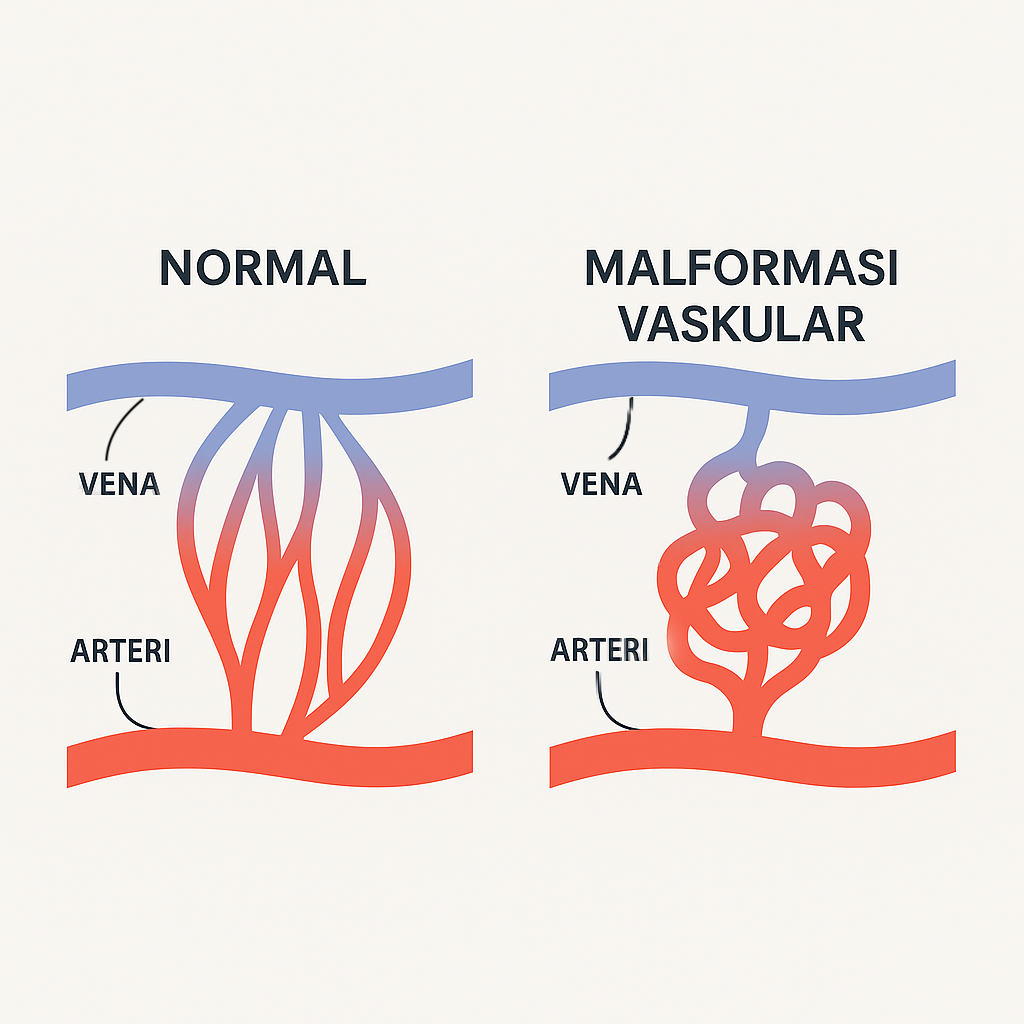
Vascular malformations typically do not resolve on their own and may increase in size over time, particularly due to hormonal changes during puberty or pregnancy. Some remain harmless and require only monitoring, while others may lead to complications such as pain, clot formation, or bleeding, which makes early evaluation important.
Causes and Risk Factors
The exact cause of vascular malformations is not fully understood, but they are believed from irregularities during fetal development. Several genetic and environmental factors may contribute to their formation and progression.
Possible Causes:
- Genetic mutations – Some vascular malformations have been associated with inherited or spontaneous gene changes that affect blood vessel development.
- Congenital defects – These malformations form before birth and may only become apparent later in life.
- Hormonal influences – Changes during puberty or pregnancy may contribute to the growth of certain vascular malformations.
Risk Factors:
- Family history – Certain inherited conditions, such as Hereditary Hemorrhagic Telangiectasia (HHT), may increase the likelihood of vascular malformations.
- Trauma or injury – In rare cases, an injury may be associated with abnormal blood vessel development.
- Associated syndromes – Some conditions, such as Klippel-Trenaunay syndrome, are known to include vascular malformations as part of their presentation.
Understanding these factors can help guide monitoring or treatment.
Treatment Options
The approach to treating vascular malformations varies based on their type, location, and severity. While some cases may only require regular monitoring, others could benefit from medical intervention to help manage symptoms and reduce the risk of complications.
Common Treatment Approaches:
- Conservative management – Some mild cases may be monitored with regular check-ups if symptoms remain minimal.
- Compression therapy – This may be recommended for venous malformations in the limbs to help reduce swelling and discomfort.
- Medications – Certain targeted therapies may assist in symptoms management and could slow malformation growth.
Minimally Invasive and Surgical Treatments:
- Sclerotherapy – A common treatment for venous malformations that involves injecting a special solution to shrink abnormal blood vessels.
- Embolization – A minimally invasive procedure where a catheter is used to reduce the abnormal blood flow, potentially alleviating symptoms and lowering the risk of complications.
- Surgical removal – In certain cases, excision may be considered if the malformation causes significant pain or functional impairment.
Vascular embolization is one of the available treatment options that may be recommended based on individual patient needs, offering a minimally invasive approach with a shorter recovery time compared to traditional surgery.
When to Consider Treatment
Not all vascular malformations require treatment, but if symptoms worsen over time, medical evaluation may be necessary. Treatment might be considered when the condition begins to affect daily activities or presents potential health concerns.
Treatment may be recommended in cases of:
- Persistent pain or swelling – Discomfort that gradually worsens and affects quality of life.
- Recurrent bleeding or clotting – Increased likelihood of internal bleeding or thrombosis.
- Functional impairment – If movement or organ function is impacted.
Other factors to discuss with a healthcare provider:
- Cosmetic concerns – Noticeable swelling or discoloration that may affect self-confidence.
- Progressive growth – Changes that occur over time, potentially influenced by hormonal fluctuations.
- Limited response to conservative care – If medications or compression therapy do not provide sufficient symptom relief, minimally invasive options such as embolization may be considered.
Minimally invasive approaches are often prioritized when appropriate, aiming to provide effective symptom management with reduced recovery time.
The Procedure and Benefits
Embolization is one treatment option for vascular malformations. Its suitability and potential benefits depend on individual clinical evaluation.
How the Procedure Works:
- A thin catheter is inserted into the affected blood vessel using image-guided technology.
- A specialized embolizing agent is introduced to block the abnormal vessels.
- Blood flow is redirected to healthier vessels, which may help reduce pain and swelling.
Key Potential Benefits of Embolization:
- Minimally invasive – No large incisions, which may contribute to a shorter recovery period.
- Lower risk of complications – Associated with less bleeding and scarring compared to open surgery.
- Symptom management – May help control pain, swelling, and functional concerns.
Many patients are able to return home on the same day or after a short hospital stay, depending on individual factors. Those considering treatment should consult a healthcare professional to discuss whether embolization is a suitable option for their condition.
Post-Treatment Care and Recovery
Post-procedure care plays an important role in ensuring a smooth recovery following vascular embolization. Patients are typically provided with specific guidance to help support the healing process.
What to Expect After the Procedure:
- Mild swelling or bruising may occur, but this usually subsides within a few days.
- Pain is generally minimal and can often be managed with prescribed or over-the-counter medication.
- Many patients are able to resume light activities within a few days, with full recovery typically expected in a few weeks.
Recommended Recovery Measures:
- Follow-up visits – Regular check-ups allow healthcare providers to monitor healing progress and address any concerns.
- Compression therapy – In some cases, wearing compression garments may be recommended to help reduce swelling.
- Activity adjustments – Patients are usually advised to avoid heavy lifting or strenuous exercise until medically cleared.
By following these recommendations, patients can support their recovery and gradually return to daily activities. Any concerns during the healing process should be discussed with a healthcare provider.
Why Patients Trust Dr. Chua
Dr. Benjamin Chua is a registered vascular specialist who performs minimally invasive procedures such as vascular embolization. He performs vascular embolization and other interventional techniques as part of his clinical practice, offering various treatment options for patients managing vascular malformations. Based on clinical assessment, treatment plans are tailored to individual patient needs with a focus on both medical outcomes and overall well-being.
For Indonesian patients, Dr. Chua offers support through a dedicated Bahasa-speaking concierge team. This team assists with appointment scheduling, travel arrangements, and post-treatment coordination to help streamline the process. His treatment approach includes a range of clinically accepted vascular procedures tailored to individual clinical assessments.
FAQ
AVM surgery is generally regarded as a safe procedure, but risks vary depending on the AVM’s size, location, and patient health. While some complex cases may carry higher risks, surgical morbidity rates are typically low, and outcomes may be favorable with appropriate treatment.
Patients are typically advised to avoid strenuous activities, adhere to prescribed medications, and attend follow-up check-ups. Driving may be restricted until medically cleared. These precautions can help reduce the risk of complications and support recovery.
Arterial bleeding occurs when an artery is damaged, often resulting in bright red blood spurting with each heartbeat. This condition requires prompt medical attention, as severe blood loss could lead to complications such as stroke.
Recovery depends on the severity of the rupture and the effectiveness of medical intervention. While the brain has some ability to adapt through neuroplasticity, significant damage may result in long-term neurological effects. Early treatment can improve the likelihood of recovery.
A blocked vein may lead to conditions such as deep vein thrombosis (DVT), which can cause swelling and discomfort. If untreated, this could progress to serious complications such as pulmonary embolism, which requires immediate medical attention.
Supporting vascular health includes maintaining a balanced diet, staying physically active, avoiding smoking, managing stress, and staying hydrated. Routine medical check-ups may help detect vascular issues early and reduce potential risks.
A ruptured blood vessel can result in complications such as hemorrhagic stroke or internal bleeding. Symptoms may include sudden headache, swelling, or dizziness. Seeking immediate medical attention is critical to prevent further complications.
Abnormal blood vessels develop with structural irregularities that may affect normal blood flow. These vessels can be malformed, narrowed, or enlarged, which may increase the likelihood of bleeding or blockages. Certain conditions, such as arteriovenous malformations (AVMs), can be associated with these changes.
AVMs may disrupt normal blood flow and oxygen supply to the brain, potentially leading to abnormal electrical activity that can trigger seizures. The risk can vary based on factors such as the AVM’s size and location, with frontal and temporal lobe involvement being more commonly associated with seizures.
Venous bleeding occurs when a vein is damaged, typically resulting in steady dark red blood flow. While venous bleeding is under less pressure than arterial bleeding, proper wound care is essential to prevent complications.
Conclusion
Vascular malformations can cause symptoms such as pain and swelling, and in some cases, they may lead to health concerns. However, minimally invasive treatment options, such as vascular embolization, are available and may help manage these conditions. This procedure is designed to alleviate symptoms, improve function, and reduce potential complications, while often allowing for a shorter recovery period compared to traditional surgery. Seeking medical evaluation can help determine the most appropriate treatment plan based on individual needs.
Dr. Benjamin Chua has performed in minimally invasive vascular procedures and provides treatment options tailored to each patient’s condition. His approach prioritizes precision and patient comfort while following established medical best practices.
For Indonesian patients, a dedicated Bahasa-speaking concierge team is available to assist with appointment scheduling, travel arrangements, and post-treatment care, helping to ensure a smooth process. Patients who are considering treatment for vascular malformations can consult a qualified healthcare professional to explore their options.