

Facing Dialysis: What Comes Next?
Have you or a loved one been advised to start dialysis? Beyond the diagnosis itself, one of the most important decisions is how to create a reliable vascular access, as this directly affects how safe and effective dialysis can be.
For patients undergoing hemodialysis, a well-planned access is essential for consistent treatment. With the right vascular approach, dialysis can be carried out more smoothly, helping reduce complications and support long-term care.

Dr Chen Min Qi, MBBS, MRC, FRCS, FAMS
When Kidney Function Declines
Chronic kidney disease is commonly linked to conditions such as diabetes and high blood pressure. Over time, damage to the kidneys reduces their ability to filter waste and excess fluid from the body.
When kidney function reaches an advanced stage, dialysis is needed to take over this role. In hemodialysis, blood is circulated through a machine to be filtered and then returned to the body in a controlled and repeated process.
Because this treatment needs to be performed regularly, it depends on having a reliable way to access the bloodstream. This is where vascular access becomes an essential part of dialysis care.
Why Dialysis Access Matters
A well-functioning vascular access is critical to ensuring that dialysis can be carried out safely and effectively over time.
Each dialysis session requires blood to flow in and out of the body at a consistent rate. When access is stable and well maintained, treatment can proceed smoothly. However, problems with access may lead to:
- Inadequate dialysis treatment
- Interruptions during sessions
- Higher risk of infection or clotting
- The need for repeated procedures or hospital visits
For this reason, creating and maintaining good vascular access is not just a technical step, but a key part of supporting reliable, long-term dialysis treatment.
Understanding Dialysis Access Options
There are several types of vascular access used for hemodialysis. The most suitable option depends on your blood vessels, overall health, and how urgently dialysis is required.
1. Arteriovenous (AV) Fistula
An AV fistula is created by connecting an artery directly to a vein, usually in the arm. This allows the vein to enlarge and strengthen over time, making it suitable for repeated dialysis use.
It is generally considered the preferred long-term option because it:
- Provides strong and reliable blood flow
- Has a lower risk of infection and clotting
- Tends to last longer than other forms of access
However, a fistula requires time to mature before it can be used.
2. Arteriovenous (AV) Graft
An AV graft involves placing a soft, synthetic tube to connect an artery and vein. It can be used sooner than a fistula and is often considered when natural veins are not suitable.
Compared to a fistula, grafts:
- Can be used earlier after placement
- Provide a reliable alternative when veins are smaller or weaker
- May have a higher risk of blockage or infection over time
3. Central Venous Catheter
A catheter is a soft tube placed into a large vein, typically in the neck or chest. It allows immediate access and is usually used when dialysis needs to start urgently.
While convenient, catheters are generally considered temporary because they:
- Carry a higher risk of infection
- May not provide optimal blood flow
- Are less suitable for long-term use
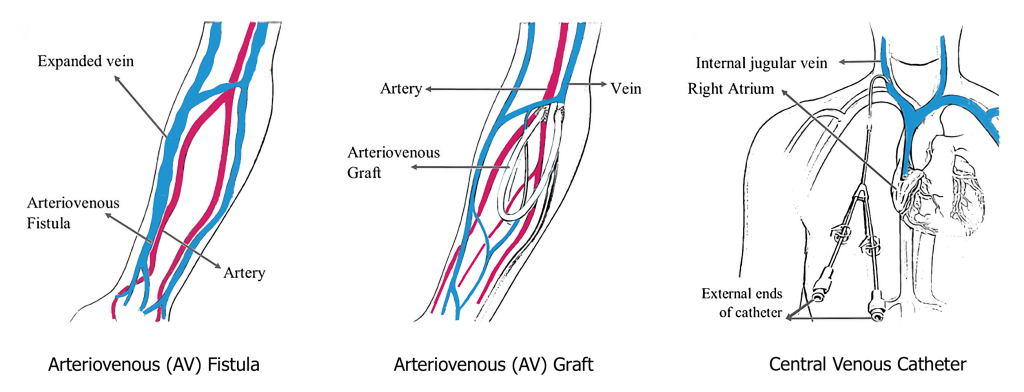
Choosing the right type of access involves careful assessment of your blood vessels and treatment needs. Early planning allows more options and can improve the long-term reliability of dialysis access. Whenever possible, planning ahead allows a fistula to be created and matured in time, reducing the need for temporary catheter use.
Creating Dialysis Access
Creating dialysis access is an important step in preparing for long-term treatment. The goal is to establish a stable connection that allows sufficient blood flow for dialysis while minimising complications.
Access procedures are typically performed under local anaesthesia using minimally invasive, image-guided techniques. Many patients are able to return home on the same day or shortly after, depending on the type of access and individual condition.
When access is carefully planned and functions well, it provides several important benefits:
- Effective and consistent blood flow during dialysis, allowing proper removal of waste products
- Use of established access types, such as AV fistulas, which are generally associated with a lower risk of infection compared to temporary catheters
- Fewer interruptions during dialysis sessions
- More consistent and predictable treatment over time
A well-functioning access can help make dialysis more manageable as part of a regular routine, rather than an ongoing source of uncertainty.
Maintaining Dialysis Access
Creating access is only the first step. To remain effective, it must continue to function reliably over time.
Regular monitoring is important, as access sites may develop narrowing (stenosis) or reduced blood flow. When this occurs, early intervention can help restore function and prevent more serious problems.
Common maintenance procedures include:
- Balloon angioplasty, to widen narrowed segments of the blood vessel
- Thrombectomy, to remove blood clots that may block the access
- Access revision or optimisation, depending on the condition of the vessels
With proper care and timely intervention, many access sites can continue to function well for an extended period. Early detection and treatment can help prolong the lifespan of the access and reduce the need for more complex procedures.
Healing and Moving Forward
Recovery after dialysis access procedures is generally well tolerated and depends on the type of access created.
For AV fistulas and grafts, patients are usually able to return home on the same day. Mild discomfort, swelling, or bruising around the access site may occur and typically improves within a few days.
Patients are commonly advised to:
- Keep the access site clean and dry
- Avoid heavy lifting or strenuous activity for a short period
- Monitor for signs such as increased pain, swelling, redness, or reduced blood flow
Follow-up is an important part of care. For fistulas, time is needed for the vein to mature before it can be used for dialysis. Regular review helps ensure the access is developing properly and functioning as expected.
Over time, ongoing monitoring may be required to detect any narrowing or changes in blood flow early, allowing timely intervention when needed. With proper care and follow-up, many patients are able to maintain reliable dialysis access for long-term treatment.
Why Choose Dr. Chen Min Qi?
Choosing the right specialist is an important part of planning dialysis access. Dr Chen Min Qi is a fellowship-trained vascular and endovascular surgeon with a focus on image-guided, minimally invasive procedures.
He is experienced in creating and maintaining dialysis access, including arteriovenous fistulas, grafts, and catheter-based interventions. His practice also includes managing access-related issues such as narrowing of blood vessels and clot formation, using techniques such as angioplasty and other endovascular procedures to restore and preserve access function.
Dr Chen has been involved in more than 2,000 vascular and interventional procedures, with an emphasis on careful planning, procedural precision, and long-term access reliability.
At the Vascular & Interventional Centre, procedures are performed in a hybrid operating theatre equipped for advanced imaging and minimally invasive treatment. Indonesian patients are supported by Bahasa-speaking concierge services and local coordination, helping ensure a smooth and well-organised care journey from consultation to follow-up.
FAQs
Dialysis access is the pathway that allows blood to flow in and out of your body during hemodialysis. A well-functioning access is essential for safe and effective treatment.
An arteriovenous (AV) fistula is often recommended because it is more durable and has a lower risk of infection compared to other options.
An AV fistula usually needs several weeks to develop before it can be used. Your doctor will monitor its progress to ensure it is ready.
The procedure is typically performed under local or regional anesthesia, so discomfort is minimal. Mild soreness after the procedure is normal and usually temporary.
Most patients can gradually return to daily activities, but you should avoid heavy lifting and protect the access area during recovery.
If there are signs of blockage or reduced function, early evaluation is important. Many issues can be managed if detected early.
Not always. In many cases, access is created in advance so it is ready when dialysis becomes necessary.
Dialysis is usually required long-term unless a kidney transplant becomes possible. Your doctor will guide you based on your condition.
Yes, support is available to help Indonesian patients understand the process, including consultation, travel planning, and appointment scheduling.
You can simply reach out via WhatsApp, and our team will help explain your options and assist you in arranging an appointment with Dr. Chen.
Get the Right Care at the Right Time
If you or a loved one has been advised to start dialysis, early planning of vascular access can help support safer and more consistent treatment.
A consultation allows for assessment of your blood vessels, review of your medical condition, and discussion of the most suitable type of access based on your individual needs. This helps ensure that the chosen approach is appropriate, timely, and aligned with your overall treatment plan.
For international patients, our team provides coordination support, including appointment scheduling and Bahasa-speaking assistance, to help make the process more organised and manageable.